

3 LITTLE THINGS: Fun ball exercises I'm loving to improve balance and coordination.
No racquet required. These movements only require a small ball, a wall — and some patience.

Buy-in
My newest fitness goal: Become stumble-proof.
It doesn’t sound as sexy as gaining muscle mass or improving VO2 max cardio fitness. But for adults 50+, being stumble-proof is probably the single most important injury-prevention principle.
That’s because as we enter our 60s and beyond, fall-related injuries become a major driver of fractures, head injuries, sprains, and shoulder or wrist trauma.
Grace has never been my forte (ask my folks). I’m long and angular. I slouched a lot as a kid. In gymnastics, I clocked more time in the foam “fall” pit adjacent to the balance beam than I did on the beam itself.
Now as I approach my 55th birthday, balance and “proprioception”—that sixth sense that helps us understand how our body is moving in space—are becoming essential components of my weekly exercise regimen.
I only wish I’d started sooner.
So, this week I’m sharing three simple moves — with my first video — that my awesome, badass trainer, BJ Ward at Born Fitness, recently added to my routine when I shared my goal.
My one ask: BJ, please make it fun!
Post
In layman’s terms, proprioception is our ability to know where our joints and limbs are without looking at them.1
For instance, if we are walking on concrete and suddenly switch to an uneven gravel trail with rocks, the body needs to adjust the muscle tension in our feet and legs so we can keep our balance and walk smoothly.
I now incorporate many different exercises that may help with proprioception, postural control, balance or ankle stability.
Many of them — such as the ones below — require standing on a single leg while performing the activity, which has been shown to improve balance performance.2
Balance and lower body weakness are one of the modifiable risk factors for falls, which are the leading cause of injury-related death among adults ages 65 and older.3
These single-leg ball toss exercises are ordered from easiest to hardest in my opinion.
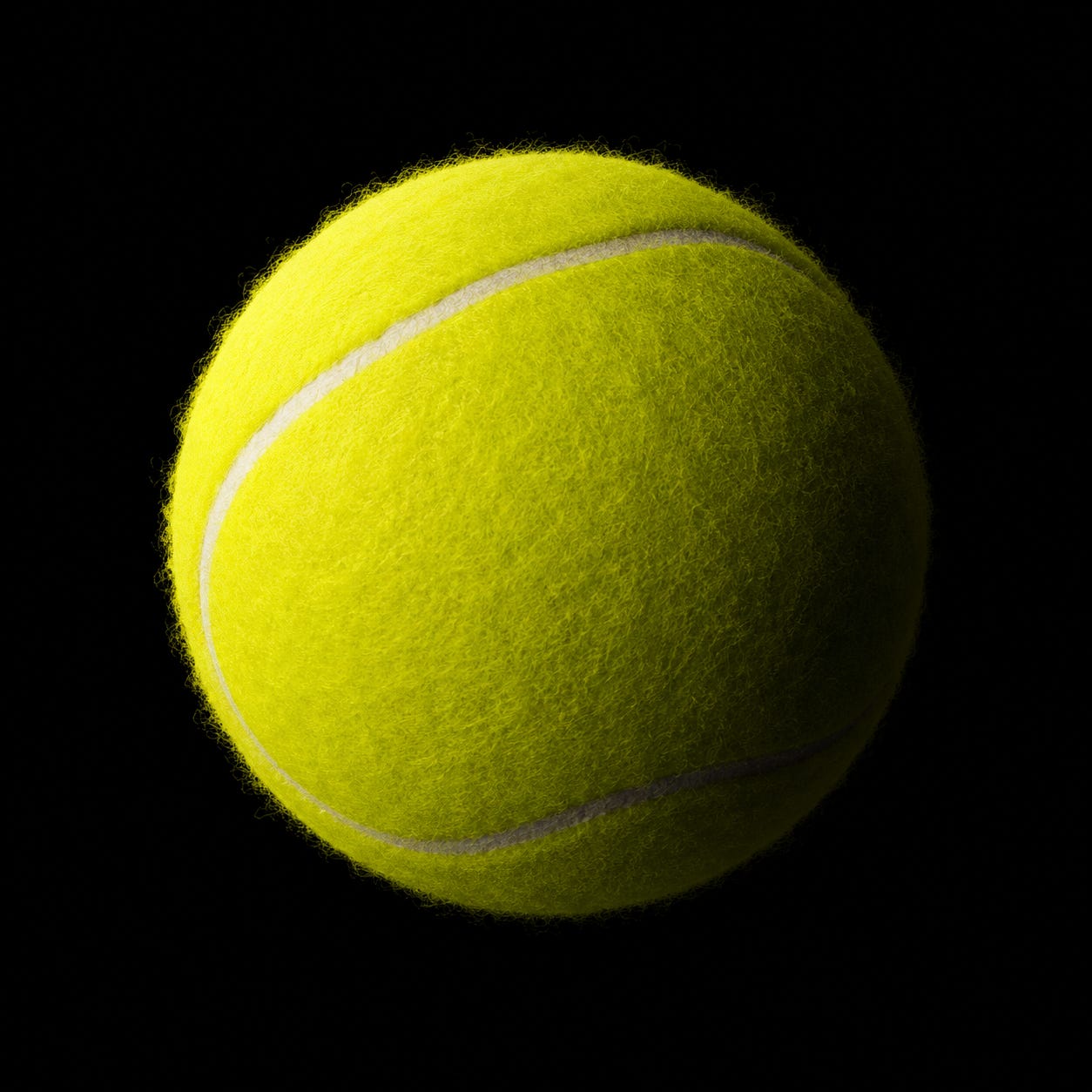
A tennis ball is easy to catch if your hands get sweaty, I find. But any ball roughly that size that you can catch in one hand and has some bounce can work.
#1. Single leg balance with ball toss
Stand on one leg with the other leg bent gently behind you—lifting it just a few inches off the ground. If you are unsteady, do this near a wall or counter.
Attempt to keep your heel, base of the big toe and little toe all grounded.
Don’t lock your knee; soften it a bit.
Toss a tennis ball back and forth between your hands for 20-30 seconds. (Tip: Ask your preferred voice-activated virtual assistant (Siri, Alexa, etc.) to set an audio timer so you don’t need to look at your phone.)
Breathe calmly and steadily. Try not to roll to the outside of your foot.
Switch legs and do it again.
Note: If this movement feels tricky at first, ditch the ball and try simply turning your head from side to side slowly while standing on one leg. As you progress, you can throw the ball higher and/or increase the speed of your toss.
#2. Single leg balance with lateral ball toss
Stand near a wall — roughly 3 to 6 feet away — with one side of your body pointed toward the wall. (See video if this is confusing.)
Balance on leg closest to wall and lift other leg a few inches as in Exercise 1.
Hold ball in hand on same side as lifted leg. (If left leg is lifted, hold the ball in your left hand.)
Gently toss ball against the wall and catch with the same hand.
It’s OK to turn your head and watch the ball. Try to keep your chest facing forward.
Repeat for 20-30 seconds. Then switch sides.
Note: The closer you stand to the wall, the easier the exercise is. As you progress, you can move further out or stand on a foam pad like this one that I use from Airex.
Single leg balance with double ball toss
For this one, you need two balls and a bit more coordination :)
Stand facing a wall — roughly 6 feet away. Hold a ball in each hand.
Stand on one leg as you did in previous exercises. Keep your standing knee slightly bent, almost as if you were about to start walking or running.
Locate a spot on the wall at about eye level.
Toss both balls against the wall and then catch them.
Try this 5-10 times on each foot.
Note: If you are unsteady on your feet, don’t start with this exercise; work up to it. Attempt to keep your shoulders relaxed and don’t swing your torso from side to side.
Final tip:
I still drop the balls. You should see the outtakes of that video! It helps to have a buddy to retrieve them.
Cash-out
For those new to Not Too Late, here are some related newsletters on balance and injury-prevention (some available only to paid subscribers):
Avoiding and recovering from injuries after 50 — a practical primer. (Link)
Why ‘retro walking’ might be worth adding to your daily routine. (Link)
Step up: How to keep our feet & ankles strong. (And why.)(Link)
The Basics: Hydration, vice ‘buy-ins’ and lateral movement. (Link)
As always, find something you love. Dig in. Stick with it when things get hard.
Wendy
About me:
I’m Gwendolyn Bounds — an author, speaker and journalist. Currently, I work at The Wall Street Journal Leadership Institute as the Senior Vice President & Head of Content. My latest book is “Not Too Late: Break the Cycle of Sameness and Reimagine Your Limits.”

Sources & deeper exploration:
Cleveland Clinic. 2024. “Proprioception: What It Is, How To Improve It & Disorder.” Cleveland Clinic Health Library. Last updated July 25, 2024. (Link)
I’m definitely incorporating these into my routine. On a side note, I signed up for my first spartan race next summer. I’m going to do the sprint race for my age group.
In your book you mention a warm up where you jump rope with a resistance band around your ankles. That means you were doing the Side Straddle jump?
Thanks